


2022 Graduates
Lizzy

Lizzy (Elizabeth) has been a part of The River Academy since she was an infant. As the daughter of our Head of School, she has grown up within the walls of our school, though she officially became a student in Kindergarten.
Lizzy enjoys spending time with her classmates and the younger students. It is during those times that her kindness and joy in the Lord truly shine. She also loves to spend time outdoors playing with her dog and visiting National Parks.
Favorite TRA Tradition
It was very hard for Lizzy to choose just one tradition that she will miss most, but Reformation Day and Tall Timber are the two at the top of her list. Both of these traditions have strong elements of community and team building while learning and having a lot of fun. These relational activities are very important to Lizzy; she takes a lot of joy in spending time with her classmates and younger students.
Advice for Next Year's Seniors
Lizzy advises next years seniors, “Seniors should know that senioritis is real, but they shouldn’t let it bother them. They need to enjoy each other and everyone else around them. Senior year is really busy, but also insanely fun!”
Most Influential Staff Member
When asked to name an individual who has had a lot of influence during her time at TRA, she couldn’t choose. “All of the staff members have been amazing! They’ve all influenced me in different ways and I am extremely grateful for how much they’ve been a part of my life.”
Future Plans
There are big changes this next year for Lizzy; not only will she be attending Covenant College in Georgia where she plans to major in International Studies, but her family is moving to Birmingham, Alabama. She is excited about the change and the new adventures this next year will bring. Just think of all the new National Parks she will now have access to!
We will miss having Lizzy visiting the halls of The River. We love you and can’t wait to see what God has planned for you!
Jonah

Jonah joined The River Academy in the sixth grade and has shown amazing growth and abilities as a leader. His character shines during House activities, playing sports, in the classroom, and during time spent with friends.
Most Influential Teachers
He credits the faculty and staff for their part in helping him grow personally, “I would have to say everyone at TRA has helped me grow into the person I am today. I would, however, like to give a special shout out to all the teachers that have had me since I was younger, because they know that the person they initially met and the person standing here now are two different people. I just want to say, thank you for always believing in me and helping me become a better Christian man.”
Favorite TRA Tradition
His love of outdoor activities and working out lend themselves well to one of his favorite parts of TRA secondary culture: House Fridays. Jonah has served as an elected House Leader in Wilberforce House (go Phoenixes!) and a dedicated player and encourager in House games.
Favorite Scripture
Jonah takes inspiration from the verse 2 Timothy 4:17, “Notwithstanding the Lord stood with me, and strengthened me; that by me the preaching might be fully known, and that all the Gentiles might hear: and I was delivered out of the mouth of the lion.” He has chosen this verse because it reminds him that no matter what he is going through, he has God supporting and encouraging him.
Advice to Younger Students
His advice to younger students is to enjoy the time you have at school because it goes by fast.
Future Plans
Jonah will remain in the area for the next 2 years as he attends Wenatchee Valley College.
We will miss your enthusiastic energy and contagious smiles around The River and we pray that God watches over you in the days to come.
Soren

Soren has attended The River Academy since Kinder Prep and has been a lively and animated part of our student body throughout his time here. Soren has been a strong, vocal member of Tyndale House over the years, lending his humor and physicality time and again to his House.
Favorite TRA Tradition
His favorite part of TRA traditions is singing Psalms, which is also a part of his advice to younger students, “Sing the Psalms with enthusiasm. Enjoy your time at the River; it ends quickly.”
Hobbies
When he's not singing Psalms or making us laugh, Soren spends most of his spare time outside doing something physically active. His hobbies range from motorbike building and riding, to RC car and drone operations, to playing Ultimate Frisbee.
Most Influential Person at TRA
Soren credits Mr. DeVries as one of the most influential parts of his time at TRA, sharing that DeVries has offered great advice and correction over the years.
Future Plans
For the past two years, Soren has enjoyed being a part of the zero period TEALS Computer Science class. He will be applying the skills learned during those classes with Mrs. Baker as he studies Computer Science at Grand Canyon University in Phoenix, Arizona, where he received a Dean Scholarship.
We will miss both your energy and contagious laugh around TRA, Soren. It has been a joy watching you grow spiritually, academically, and relationally over the last 14 years. May God bless your time at GCU!
Conor

Conor started attending The River Academy his Kindergarten year, and ever since that very first day he has been a friendly, kind, and positive influence on the other students at TRA. Twice he received The Spirit of the River award, chosen by a vote of students and teachers. He has also been a House Leader for 5 years running.
Physical activities and sports are important to Conor. He played on the varsity football team at Wenatchee High School, part of that time as the starting quarterback. In his free time, he loves to paddle board on the Columbia, hike any mountain with a view, and collect sports cards.
Favorite TRA Tradition
The beloved House Wanda Bowl!
Advice to Younger Students
Conor advises younger students at TRA to enjoy their time at school and to not procrastinate when doing assignments. "The time goes by so quickly and you do not want to have regrets about how you used the time you have," he shared.
Most Influential Teacher
Conor credits Mr. Hettick as one of the most influential people during his time at TRA. “[He] has been so influential to me all of high school! The Holy Spirit just radiates out of him and his prayers have helped me more than he will ever know.”
Favorite Scripture
Isaiah 41:13: "For I am the Lord your God who takes hold of your right hand and says to you, Do not fear; I will help you." His reason for this reassurance is, “As a young child, there is no greater security than the comfort of holding mom or dads' hand. This same type of security is found when the creator of the universe stretches out his hand toward me. This is so calming and reassuring to my soul when I need it most.”
Future Plans
Conor is still deciding where he will attend college next year, and is considering a career as an EMT... as long as he doesn't have to work with feet. We will miss you, Conor!

Annelise
Since her very first year, Annelise has been an integral part of The River Academy’s student culture. Even as a first grader, her fiercely competitive yet kind nature has shone through.
Annelise has shown exceptional leadership at both TRA and Eastmont High School, where she has played several sports and served as captain of both the girl's basketball (junior and senior year) and soccer (senior year) teams.
Favorite TRA Tradition
As a Tyndale House Leader, her most-loved activity at TRA is House Fridays.
Advice to Younger Students
Annelise encourages younger students to take the time to enjoy each other's company, “It goes by SO fast. Embrace your time at TRA with all the amazing staff, but especially your class. Take the time to hang out; it doesn't need to be anything big. The simple moments are some of my best memories.”
Favorite Scripture
Her favorite Bible verse is Isaiah 40:31 because, “At a time in life when there are so many stressful decisions, deadlines, and worries, this verse always reminds me to hold on to and hope in God. Even if it's not in the way I thought, He has a plan and provision far greater.”
Most Influential Staff Member
When asked who has been an influential person at TRA during her 12 years attending she couldn’t pick just one, “Honestly, there are too many to count. I have been blessed to be surrounded by encouraging, wise, and laughter-filled teachers and staff throughout my time at TRA. I am beyond grateful for them all and the impact they have had on my life.”
Future Plans
Annelise has signed a letter of intent to play soccer at Central Washington University this coming fall where she will be pursuing a degree in education.
We will miss your strong leadership and Christ-like impact, Annelise, and we can’t wait to see all that the Lord has planned for you!
Rianne

"Rianne has attended The River Academy since preschool. During that time, she has been a consistent source of encouragement to both students and staff. Her love for others and genuine kindness have always been the first qualities people notice about Rianne.
Hobbies
Rianne's favorite activities are spending time outdoors running, fishing, and taking part in all water sports. She also enjoys dancing and spending time laughing with her friends.
Favorite TRA Tradition
Her favorite tradition at TRA is Spirit Week: the House tradition of dressing in a different theme each day for one week. This year features Patriotic Day, Twin Day, 70’s/80’s Day, Meme Day, and Hawaiian/Tacky Tourist Day. As a proud member of Wilberforce House, we are sure she will go all out for her last year!
Favorite Verse
Rianne’s favorite Bible verses remind us how in our weakness we are made strong in Christ. “But he said to me, 'My grace is sufficient for you, for my power is made perfect in weakness.' Therefore I will boast all the more gladly about my weaknesses, so that Christ’s power may rest on me. That is why, for Christ’s sake, I delight in weaknesses, in insults, in hardships, in persecutions, in difficulties. For when I am weak, then I am strong,” (2 Corinthians 12:9 and 10).
Advice to Younger Students
“When you risk and you fail, you’re not a failure. You’re a risk-taker!” This is something Rianne has put into action herself this year. When she decided to take the risk and run for the Apple Blossom Royalty Court this year, she did not think she would have a chance to win, but knew she need to make the leap and try. This paid off when she was crowned the 103rd Apple Blossom Queen! We are so proud of the way she has represented our valley, our school, and our Lord in this role.
Most Influential Staff Member
She has been greatly influenced by Mrs. O, who has been an incredible encouragement to Rianne, consistently offering advice and prayer.
Future Plans
Rianne will be attending Grand Canyon University and plans to major in Business Administration.
Rianne, your kindness and quiet leadership will be missed this next year at TRA. God bless you as you adventure outside of our walls.
Jazmyn

When Jazmyn joined The River Academy seven years ago, her kind and joyful spirit quickly won the hearts of her classmates and teachers. During her time at TRA, her faith in God has deepened and her perseverance has helped her academically.
Favorite TRA Tradition
Her favorite tradition at The River is Reading Buddies “[It] is something I will forever cherish. It has been a blessing to read to the younger kids. Every time I see them [it] is a reminder of God's work in our lives. It is amazing to hear about their days and their lives. I will truly be sad to leave the school, not getting the opportunity to see them grow in their relationship with God.”
Advice to Younger Students
She has a lot of great advice to offer younger students: “My advice is simple, but it takes work. Create and build relationships. It will make life at the River Academy so fun. Once you build relationships with your class, school becomes a place that you want to go to--Not just for messing around, but it makes it more fun to talk about books and assignments with your class. It makes everything so much more exciting. Do not take teachers and the wonderful ladies in the office for granted. They are not just there to set up events and take attendance, they will truly help you make it through your high school career. They want you to succeed.”
Most Influential Staff Member
Jazmyn credits Mrs. Johnson as one of the most influential people for her this last year, “I have an endless list of people that I would like to thank. I wish I could mention each and every one of them. The person who really got me to where I am is Mrs. Johnson. She has become a person I can talk to about anything and everything. I am so glad to have her in my life.”
Hobbies
During her spare time, Jazmyn enjoys taking pictures, something she has enjoyed since she was a little girl. She plans to keep this as a lifelong hobby.
Future Plans
Jazmyn is planning to attend a four-year university; she is still deciding on the goal of becoming a Child Life Specialist.
We will miss your bright and cheerful smile around TRA this next year. May the Lord bless you.
Olivia

OJ" began attending The River Academy in her 3rd grade year. It has been fun watching the seemingly shy and quiet girl become the involved and vocal young lady we know today. In fact, OJ is in the running for being the LOUDEST senior this year; keep in mind this is a class that has our beloved Soren in attendance.
Favorite TRA Tradition
Olivia's favorite TRA tradition is House activities, especially “Synchronized Swimming” (when a group of students choreographs a dry land version of synchronized swimming to a favorite song). Olivia loves being a part of Tyndale House!
Advice to Younger Students
“Have fun with your classmates, both in school and outside of school. You are with them a lot and it is so much better when you spend time together and actually enjoy your time together. I have been in my class for 10 years and it wasn't until my junior year that I actually spent time with all of them and actually enjoyed it and it definitely made my high school experience much better.”
Most Impactful Teacher
“So many teachers have influenced me and shaped me into the person I am today. However, if I have to pick one, I would 100% pick Mrs. Packer. I was nervous going into my 6th grade year, but due to her personality and love for teaching, my nerves quickly went away. That experience taught me to not worry about tomorrow. Because of her endless joy and love for students, I want to do the same to others that she did for me. I want to be an Elementary teacher because of her. However, I would also say that my friends have been a major reason I am the person I am today. My friends and family are more important to me than anything else.”
Hobbies
The amazing amount of energy that Olivia has lends itself well to her love of the outdoors; skiing, mountain biking, camping, playing soccer, and swimming are just a few of the activities she enjoys. However, she does love her quiet time. Watching 1950’s sitcoms and playing the piano are two ways she unwinds after a hard day.
Favorite Verse
"For our light and momentary troubles are achieving for us an eternal glory that far outweighs them all," (2 Corinthians 4:17). Reflecting on this, she shared, “It puts in perspective our problems and the glory will we see on the other side of them. In perspective, our life is short and our problems may be great, but the glory and reward far outweigh them.”
Future Plans
Olivia will be attending Central Washington University in Ellensburg where she will be in the Honors College seeking a degree in Elementary Education.
We will all miss your joyful, boisterous, and kind spirit at TRA!.
Noah

Noah has been a part of TRA since Kindergarten and for every one of those years, his kindness to others has shown through. He offers a quiet and unassuming presence to his classmates: rarely speaking, but when he does, it is always insightful and impactful.
Favorite TRA Tradition
His favorite tradition at The River Academy is Protocol. The opportunity to dress in a nice suit, attend a special dinner, and show or event with his classmates has been impactful for Noah.
Most Influential Teacher
During his time at TRA Noah has been greatly impacted by Mr. Hettick, who offers a point of view coming from a Christian Worldview. Their discussions about everything from historical events to how to navigate the day-in-day-out minutiae have been precious to Noah.
Favorite Verse
Noah’s favorite verse is found in John verse 11:35: “Jesus wept.” The simplicity in this is very powerful to Noah. That Jesus, because of His love for us, is impacted by the frailties of man.
Future Plans
Noah is taking a gap year to focus on his family and work to prepare for college.
We will miss Noah’s sound tech skills this next year; he has been a great help to Mr. Howat and Mrs. Lane during recordings for The River Academy Radio recordings. This skill fits nicely with Noah’s love of films and movie critiquing.
May the Lord bless you in your endeavors. You are greatly loved by your TRA Family!

Why Thesis Defense?
Why Senior Thesis?
Every year, TRA Seniors anxiously yet capably ready themselves for the culmination of their classical Christian education. They’ve written their (at least) twenty-page paper; they’ve delivered speeches all year in preparation; they’ve practiced and practiced and practiced some more. Then, each takes the stage and delivers a twenty-minute speech based on their paper followed by at least twenty minutes of question-and-answer defense–all in front of a panel of four teachers and a large portion of the student body. Why do we put our Seniors through Thesis Defense?
It largely comes down to a Roman rhetorician named Marcus Fabius Quintilianus (we just call him Quintilian, though). Throughout the first volume (of twelve) of his Institutio Oratoria, Quintilian says that a true rhetorician is a good person who speaks well. Note what Quintilian does here: it’s not enough just to say good words, but to be able to stand upright and full-chested (as Lewis might say) and speak Truth. The Apostle Paul wrote letters to churches, but he also stood on the Areopagus (Acts 17) and spoke to nonbelievers using ethos, pathos, and logos to persuade them of the truth of the Gospel. He was a good man who spoke well.
At The River Academy, our students spend years in their classes reading great literature and philosophy and theology and history, participating in discussions and debates, and writing papers and reflections. But that’s just the groundwork for sending them out into the world–not just when they graduate. We educate our students to speak and live out the Truth well, beyond the safety of the four classroom walls. Each class discussion is geared toward this, all with the eventual goal of stepping onto the stage to defend a Thesis (an argument) that they’ve developed for a year.
So, just before graduation, Seniors deliver a shortened version of their Thesis Paper, because only a few people read that paper, and we want them to speak to their peers and underclassmen, to say something meaningful that will resonate with and inspire them. Moreover, when the Seniors deliver and defend their Thesis, we hope to demonstrate the rhetorical and logical skills that all our classes have honed and sharpened in them. They’ll answer questions from their teachers, poking and prodding at their logos and ethos and pathos (logic, morality/spirit, emotion) to see if their arguments hold together.
The purpose and spirit (the telos and ethos) of Thesis Defense is to turn a spotlight on a core classical value of The River Academy: educating the next generation of Christian leaders who will influence the world around them by being good men and women who speak the Truth well.
Tyler Howat
Dean of Curriculum
Senior Thesis Defense Schedule
Lizzy's Thesis:

"Am I My Tyrant's Keeper?"
Thursday, May 26 | 8:00-8:50am
In recent years, leaders have become less focused on the people and more on their own gain. To recognize their faults, leaders need accountability. Leaders without accountability fail and bring others down with them. Leaders without checks and balances become tyrants. While tyrants might be effective in achieving their goals, they cannot be considered morally good (and therefore should not be followed). Good leadership relies not on prideful autonomy but on humble accountability to ensure that leaders have the true best good of humanity in mind. Distractions are in front of the leaders every day and they need accountability to keep them from following the distractions. This paper argues why accountability is necessary because of what happens to leaders that do not have it.
Jonah's Thesis:
"A Christian's Guide to Handling the Fear of the Unknown"
Thursday, May 26 | 8:55-9:45am

In March of 2020, this unknown virus started spreading and it had us all worried. The question then arose: should a Christian be truly worried about worldly problems? This propelled me to research the topic of fear for Christians. Focusing on fear has become a problem not just for Christians, but for all people. Fear and anxiety have started to dictate how people respond, and react to certain things. This does not exclude Christians, however. Christians, of all people, should be the ones not reacting wrongly to fear-based things because we know God is in control. Christians should be reassured of God’s sovereignty in the midst of their fears. I have found through my own experiences of fear, anxiety, and worry, that if you truly put all your trust in God and believe that there is a bigger picture than what is on earth, then life will be less stressful and more fun. People need to learn how to deal with fear before it causes the downfall of humanity. There are two simple choices: let yourself be controlled by fear, or control your response to fear. Which will you choose?
Soren's Thesis:
"The Sneetching of the Modern Church"
Thursday, May 26 | 9:50-10:40am

Churches around the United States, some even right now, are deciding whether or not to follow the controversial Critical Race Theory. CRT is an intellectual idea based on the belief that the United States of America was founded upon racial bias, and those running the country are still perpetuating such institutional biases. CRT has the end goal of equity, which Vice President Kamala Harris defines as “we all end up in the same place.” Unfortunately, equity is the core idea of Marxism. Therefore, CRT does not fit with the Church’s mission because the Church’s job is the administration of word and sacrament and fulfilling the Great Commission. Churches that adopt Critical Race Theory are not holding true to the Gospel of Jesus Christ, because Critical Race Theory is a doctrine of its own and its end results are distinctly unbiblical.
Conor's Thesis:
"Forging Battle-Ready men: The Role of Contact Sports in Cultivating Godly Virtues"
Thursday, May 26 | 10:45-11:35am

This argument targets the need for strong men in our society, in which there is a dangerously dwindling amount. To solve this problem, the character development of sports proves to be an efficient way to build strong young men who can defend and protect. It is obvious that young men who develop upstanding character traits and a hard work ethic more easily grow into better friends, fathers, and husbands. All young men should play physically demanding sports in order to develop these skills. If young men in our society can develop the traits that produce Godly character, then our cities and country would be a much better place.
Annelise's Thesis:
"The Other Pandemic"
Thursday, May 26 | 12:15-1:05pm

We live in a world obsessed with body image. Both internally and externally, we tend to focus on ourselves. This self-obsession, along with the blurring of facts and feelings now allows dangerous health repercussions to ripple through society. Our nation’s cultural promotion of negative mentalities such as personal happiness, self-fulfillment, and the desire for instant satisfaction is based on self-centered, post-Truth ideals and causes a body-image pandemic. Society must work to flip these toxic ideals and embrace true fulfillment and unity of mind, body, and soul not through oneself but through God. Will we fight to correct the physical, mental, and spiritual deterioration in our country or will we fall to this other pandemic?
Rianne's Thesis:
"The Unmappable Maze"
Thursday, May 26 | 1:10-2:00pm

Failure is an inevitable obstacle that every single person has to face. Fear of failure often chains people from the truth of what their failures can teach them. Learning from failure grows and blossoms people into strong, firmly-rooted individuals who will not simply fall due to life's winds, but will deepen their roots against life's inevitable blows. So, how do we clothe our minds, souls, and bodies against this lie of failure and its common view of negativity on our lives? When strengthened, a growth mindset, perseverance, and a strong work ethic will all be part of the armor guarding us against inevitable failure. People will grow, but only through the refining fire of failure. This fear of failure can often hold people back from the anointing dream which God has for their lives and who He has created them to be. We need to learn to put on this armor in order to fully break free from the shackles of our past failures, all through grace and the wisdom gained through our scars.
Jazmyn's Thesis:
"Fair is Foul and Foul is Fair: A Christian's Guide to Discernment and Horror Films"
Friday, May 27 | 8:00-8:50am

When watching a horror movie, encountering evil is expected. Some think the horror genre should be completely thrown out as a whole because of the evil portrayed. What some people do not see is that there can be redeeming qualities, good conquering evil, and real lessons shone through these films. Christians should be able to watch horror films if they use Godly discernment. Such films should have redemptive qualities, should clearly portray evil as evil, and should not be stumbling blocks to faith. With personal discernment, knowing what will affect your heart and cause you to stumble in your faith, you can answer the question, “Should Christians watch horror films?”
Zach's Thesis:
"Of Mobs and Men"
Friday, May 27 | 8:55-9:45am

There are men in movements, yet none in mobs. This corresponds to the potential failure of the modern Christian leader, one who ought to lead in light of Christ rather than self. Furthermore, the meaning of manhood is being challenged by cowardice and the creation of mobs. Mobs eliminate the faculties of peace that Christian values hold dear, and all too many are flocking to mob mentalities rather than standing like men. However, there is a solution to this issue. Christian leaders are called to lead movements in peace and not influence fear-mongering mobs. There is a contrast of mobs and men in this wild world, Christians are called to lead toward peace over conflict.
Olivia's Thesis:
"The Father: 'Tis Here, 'Tis Here, 'Tis Gone"
Friday, May 27 | 9:50-10:40am
Why is the father image so important? What’s the big deal about entertainment portraying a goofy dad? This thesis unpacks the hidden effects of TV dumbing down the dad; effects that hurt the intended family dynamic as described in Scripture. Shows such as Modern Family, and Everbody Loves Raymond hurt the

biblical importance of the father, unlike their predecessors who depicted a biblical father. This is damaging to society because people unconsciously imitate fictional characters. What might happen if all the fathers are imitating these characters? Children seek a role model and without a biblical father in that place, they choose their own role model. Without biblical fathers, children seek attention and choose their own paths, which is damaging to society because the lack of fathers is directly correlated with the increase in violence, drug use, and teen pregnancy, to name a few. Instead of searching to television to define fatherhood, Christians need to look at the biblical definition. Through discernment and a biblical understanding, Christians can re-establish the true father figure, so that children can grow up in a proper home, ultimately benefiting society and glorifying God.
Noah's Thesis:
"From Pages to Panels"
Friday, May 27 | 10:45-11:35am

Ever since its founding, The River Academy has prided itself on the literature they teach us their students. We have read amazing works such as Hamlet, To Kill a Mockingbird, and The Great Gatsby. But there are many great literary works that our school and many others have ignored for too long: graphic novels. I know what you are thinking: aren’t Graphic Novels just comic books? What could someone learn about literature through those? With great writing and beautiful visual storytelling graphic novels provide a deep and unique way to experience themes, characterization, and pathos. Stories like Watchmen, The Dark Knight Returns, and Maus (and many others) offer the same literary depth as many of the classics do.
Elementary Class Placement

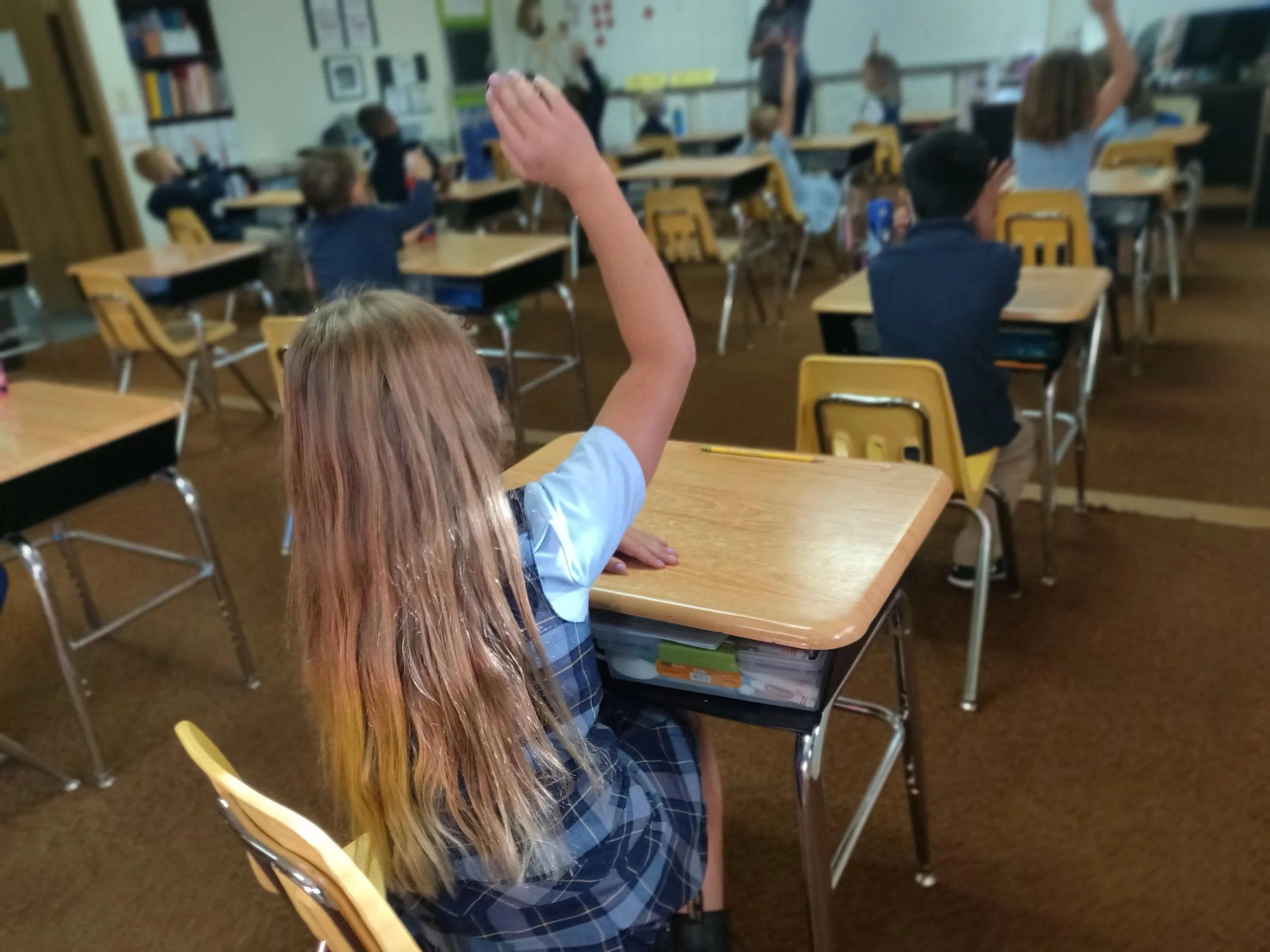
The Lord is blessing our school with wonderful growth! For the 2022-23 school year, we will be adding a second class to second grade. This raises the question of how TRA will place students into the two classes each year for grades 1 and above. As a parent of children who previously attended a school with three classes per grade, I know that this annual class shuffle can create a temptation to worry, as we all want what we think is best for our own kids. My hope is that this information will help to give your heart peace as you trust in God’s plan and wait for class lists to be announced sometime in August.
Our goal at TRA is to have two well-balanced classes for each grade. This means we strive to have a balance of genders, students from different classes the prior year for new friendship opportunities, and other factors to provide a positive learning environment in each classroom. I will be working closely with Mrs. Fox to place current Kindergarten students in each of the grade 1 classes for the 2022-23 school year, and with Mrs. Rose and Mrs. Creek to place the current first graders into two new second grade classes. Ideally each class in each grade would have 18 students, but due to our current classroom size constraints, some may have a couple more and some less depending on the grade.

I realize that each parent has in mind the best teacher and friend group for his or her child. However, TRA will not be letting parents choose their child's teacher or classmates for any grades that have two classes. I know from personal experience how difficult this can be to trust the school and the Lord to place children in the "right" class. Please know that the teachers and I will be prayerfully considering a lot of factors to make sure each student is in a healthy learning environment where he or she can thrive. We will do our best to make sure each child has at least one friend in his or her new class. We also had an amazing group of fantastic teacher applicants, so I know you will love all of our new teachers who will be announced in the coming weeks!
Thank you for your understanding and support as we take this big step forward to grow as a school. It is an exciting time of growth at TRA!
Lisa Hysom
Elementary Principal

TRA House System
Dear TRA Family,
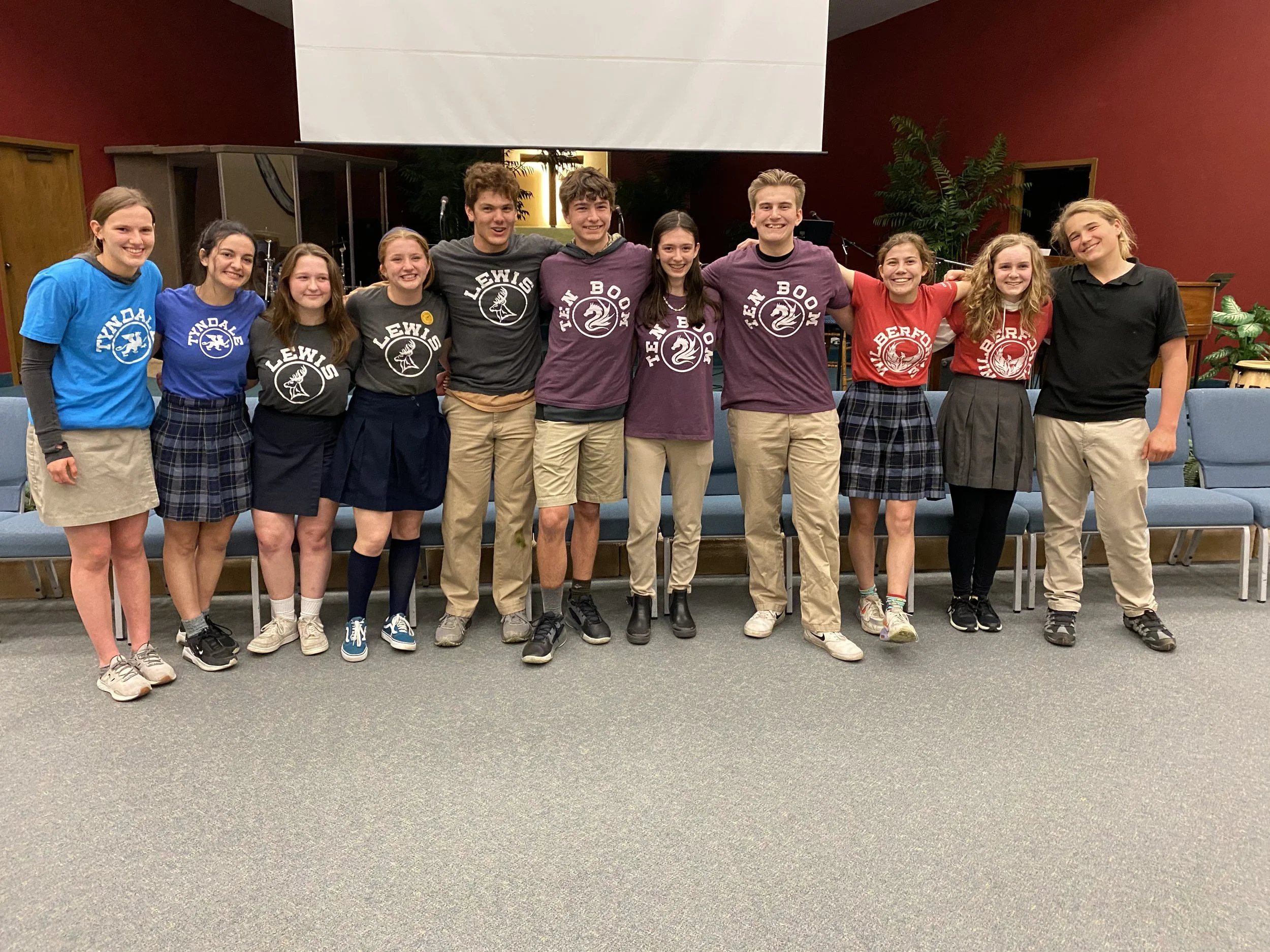
Our House System organically grows student leadership in both joyful and relational ways: two of our four core values.To create our House System, we divided our secondary classes (7th-12th grades) into four Houses named after historical prominent Christian leaders representing different virtues (Lewis, Tyndale, Wilberforce, and ten Boom). These Houses help us reach some lofty culture and leadership growth opportunities for our student body.
One of our Four Core Values at TRA is joyful learning and growing, which is fleshed out in colorful glory during House Games each Friday. Students may be gleefully chased by staff members during the dinosaur egg hunt game or might engage in a food-frisbee competition on the field. And can you imagine anything more joyful than a hundred students running and hunting through a cherry orchard for their teachers, who are all hiding in the trees?

The second core value that House has been crafted to embody is that of relational connection between students as well as between faculty and students. Having a few students from every grade grouped into each house is intentional as we strive to move kids out of their usual circles and their comfort zones to provide opportunities for building friendships and esprit de corps with students from other grades.This is especially important for the younger middle school students who might otherwise feel distanced from the larger secondary student body during their first year.
The House system also provides challenges and growth opportunities outside of a purely academic setting. House competition games on Friday usually have 3-4 components that are meant to give opportunities for all kinds of students to shine. While there is usually an academic challenge such as a spelling bee, sudoku challenge, or word game, there is also an athletic team game, such as ultimate frisbee, kickball. But because these are the kinds of skills and talents that are often highlighted at school and in school sports, we add art and drama challenges as well. Students might create a painting that represents the house mascot, or an entry for the yearbook cover competition, or compete in a song challenge singing the Psalms, or create a play about the history of the house myth. All of this is accomplished in the one hour of House games each Friday. When students choose to compete in an area outside of their usual strengths, they launch themselves—for the good of their team—into an area of risk, and growth for the sake of their House.

Considering our mission is to partner with parents to educate the next generation of Christian Leaders, likely the most important character trait we grow through our House System is student leadership. The elected house leaders have a special elective option in the fall that focuses on teaching them leadership, they have weekly lunches to plan the upcoming Friday events, and lead by example in the games and seasonal service projects.
In a nutshell, The River Academy House system is a means for character development, leadership training, and meaningful connections across grades and with the faculty. In House activities, everyone contributes and everyone belongs.
Have a great week!
Tonya Griffith
Psalm Singing
Dear TRA Families,
Have you ever wondered why we sing these “old songs” out of a book that looks like a hymnal but is instead fondly referred to as the “Psalter?”
Why don’t we sing more modern worship songs that are more of a reflection of the churches most of us attend on Sunday mornings?
Singing is a big part of life at The River Academy. As I write this note, I am being serenaded by the third grade class singing a song about the book of Judges in the Old Testament. What a beautiful sound! And while singing is a fun way to make learning enjoyable, it actually has ancient roots in the realm of education—particularly the inculcation of spiritual truths into the hearts and minds of young people.
If you look in your Bible at the heading of most Psalms, they give a description of who wrote it, what the circumstances were surrounding it, and often when to sing it. Psalms 120-134 all have the heading titled “a song of ascents.” These psalms were the ones that all of Israel would sing on their way “up” to Jerusalem to celebrate the various festivals each year. Picture this: a huge caravan of people walking up the hill toward Jerusalem singing “I lift my eyes to the hills—where does my help come from? My help comes from the Lord, the maker of heaven and earth,” (Psalm 121:1-2) or, “I rejoiced with those who said to me, ‘Let us go to the house of the Lord,’” (Psalm 122:1).
What a beautiful picture; God’s people walking and singing on their way up the mountain to worship and feast with one another.
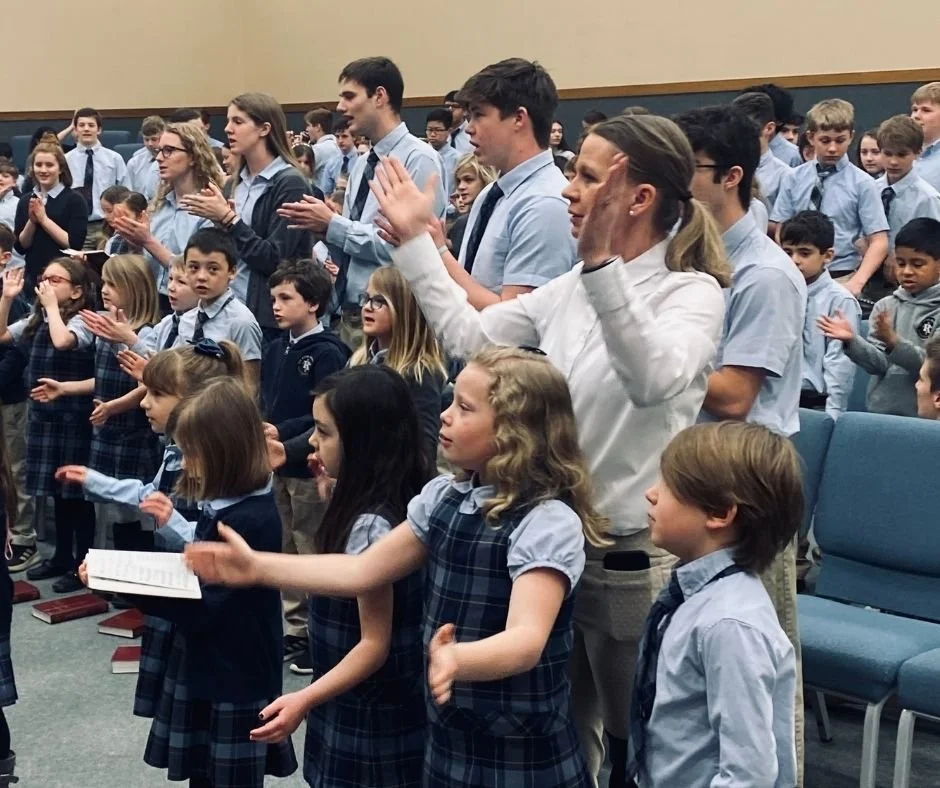
Though not quite as dramatic of an image, this is similar to the view I have each Monday morning when we gather in the sanctuary to sing Psalms. Psalm singing has been a rich tradition at TRA over the last 24 years. Here are three reasons why I LOVE singing the Psalms with our students:

The Psalms are the prayer book of the Bible. By regularly singing these Psalms, we are teaching our students to pray without them even knowing it. I can say that even for me, I find myself regularly calling out to God in the words of a Psalm that we sing here regularly.
Singing is the most powerful tool for putting things to memory. Finish this sentence: “Here comes the… “ or, “But I still haven’t…” I bet you were able to name both of those songs I just quoted. We don’t even have to try to memorize songs; it happens naturally. By singing these Psalms with students every morning, we are hiding God's word in their hearts.
The Psalms help us process life's ups and down in a way that reflects God’s heart. The Psalms contain the entire spectrum of life’s emotions: “O Lord our Lord, how majestic is your name in all the earth,” (Psalm 8:1). “Even though I walk through the valley of the shadow of death, I will fear no evil for you are with me,” (Psalm 23:4). By regularly singing these songs, we are helping our students process the gamut of emotions that life will undoubtedly throw at them, through the lens of faith—and more importantly—God’s faithfulness.
We sing Psalms together as an entire school every Monday morning. Now that we are using the church sanctuary for Psalm singing, we have more than enough room for parents to join. Next time you drop your children off on a Monday morning, stick around and be blessed by hearing these students sing their hearts out to God through the Psalms.
Have a great week,
Eric
Grandparents Day
Dear TRA Family,
Spring is in the air! Okay, last week didn’t feel like that after waking up to snow on multiple days, but when I look at the calendar, Spring ought to be in the air. By far, one of my favorite events at TRA every spring has been Grandparents Day.
We are happy to report that for the first time in two years, we will be once again celebrating our amazing grandparents by hosting them on-site in May.

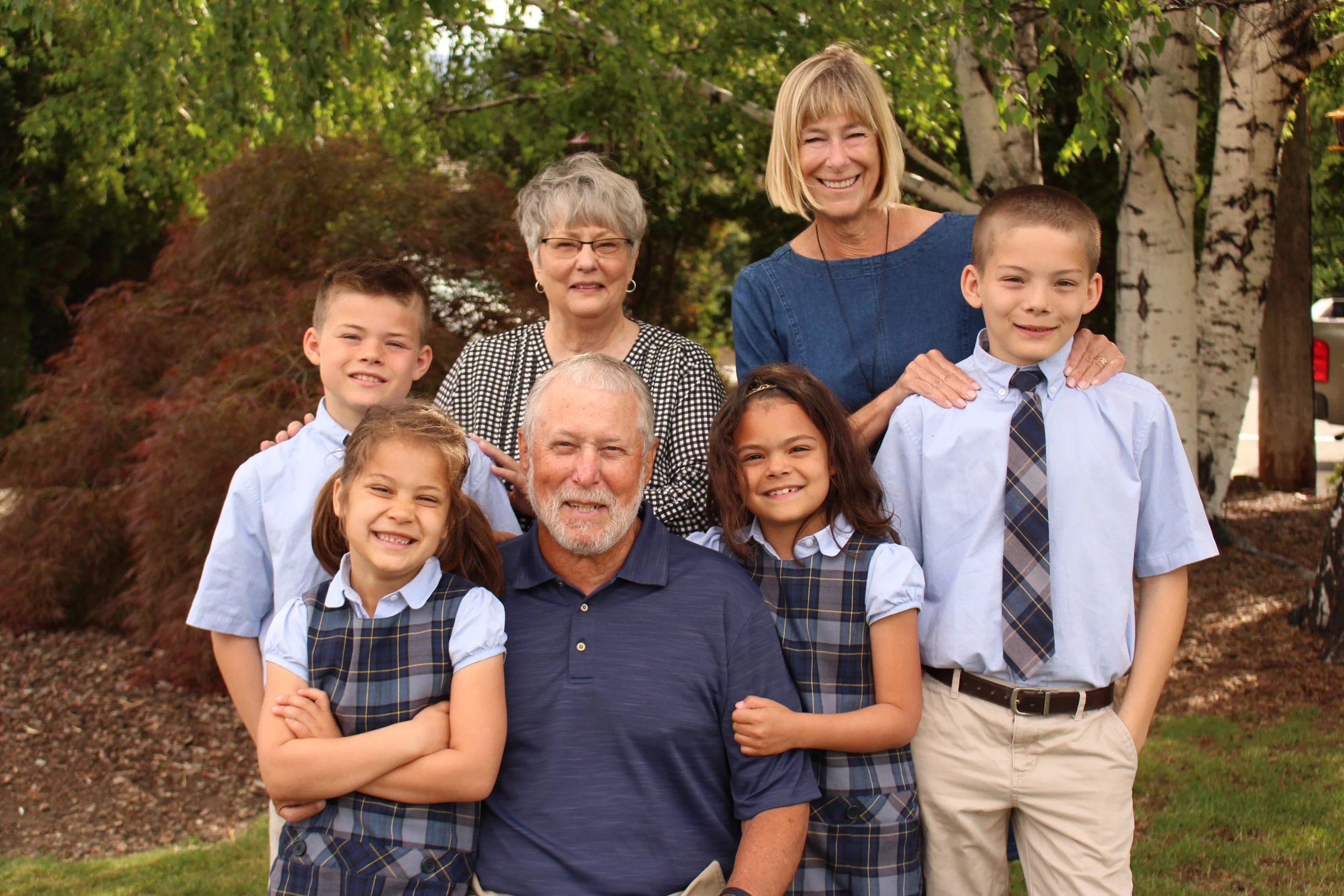
First, I can’t even begin to express how excited I am to be able to host grandparents again after a two-year break from this event due to Covid. Grandparents play such a vital role in the lives of the students. It is such a joy to be able to host them and give them a glimpse into the education their grandchildren are receiving.
Second, we have structured the day as a ½ day event that will officially begin at 9 am (for grandparents). Students will come at 8 am like they normally would and then conclude at noon. We have pushed back the arrival time of grandparents this year due to the parking limitations - especially at that critical drop-off time frame.

Third, grandparents will have the opportunity to visit classrooms from 9 am-10:10 am. This will be followed by a brief reception from 10:10 am-11 am and then an assembly with special performances from 11:15 am-noon. Due to our much larger size, seating in the auditorium will be reserved for parents and grandparents only. All students will remain in their classrooms and then be staged in the fireside room prior to their performance.
Fourth, parents are invited. We would love to host you too!
Fifth, we need your help. Would you first invite your child’s grandparents to attend? We would love to host them. Next, consider volunteering to help with the reception set up, serving, clean up, and/or baking. Look for more information coming shortly on how you can volunteer to help us pull this off.
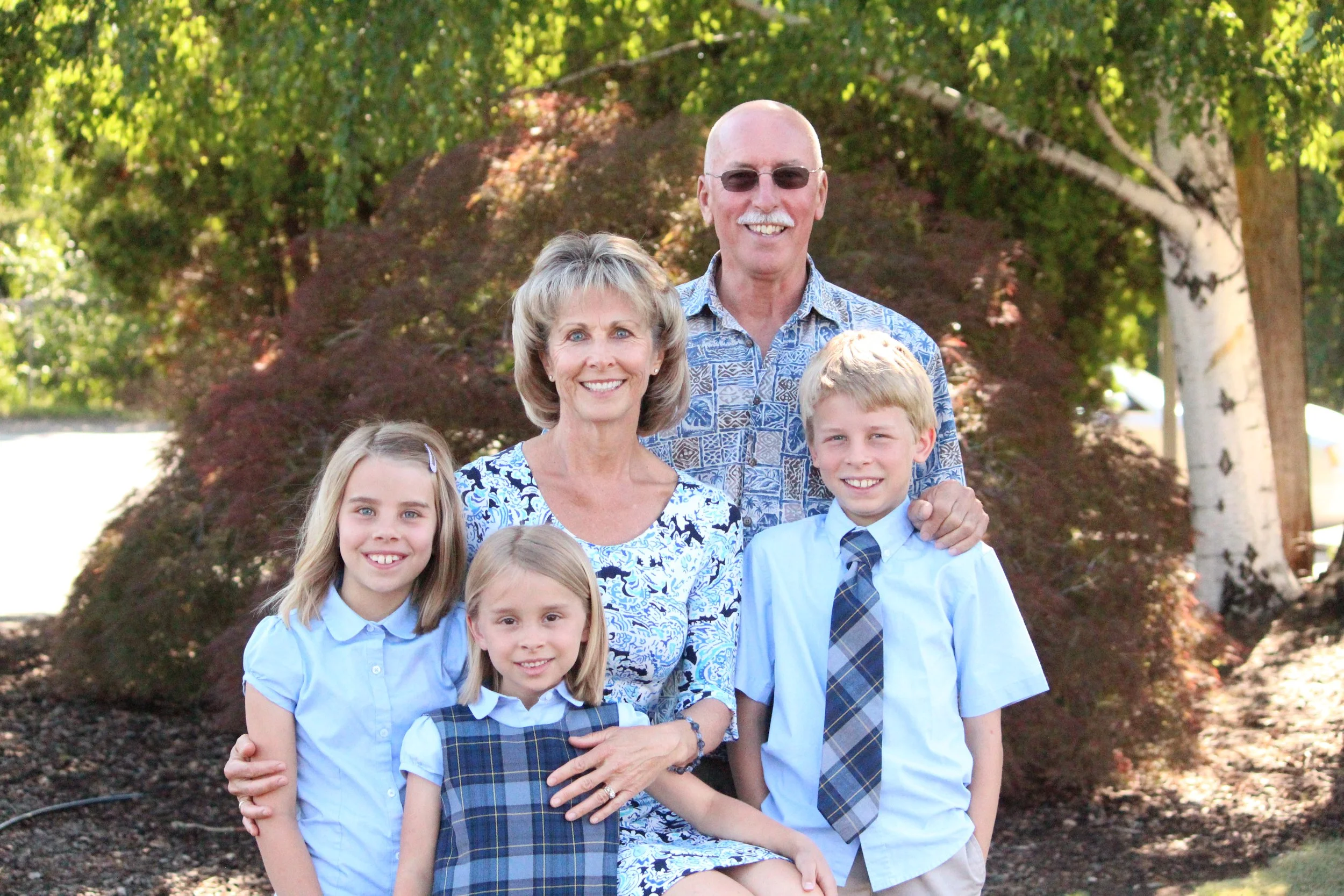
Lastly, we are so excited to again be able to engage with your children’s grandparents. We hope that the day will bring them great encouragement and hope as they get a small glimpse into the education provided here at TRA.
Looking forward to seeing you in a few weeks,
Eric
How Exactly Does TRA Educate Future Leaders?
Dear TRA Families,
The mission of The River Academy is to partner with parents in educating their children to become the next generation of Christian leaders to shape culture through faithful, wise, and joyful Christian living. Two questions I often get asked with regard to this mission statement are:
1. Why Christian leaders; are all people destined for leadership?
2. How exactly does TRA educate leaders? Isn’t this an academic institution, not a leadership training center?
Great questions - here are my answers to both.
First, why would we make it our mission to educate Christian leaders? I usually answer this question by first defining leadership. John Maxwell regularly defines leadership as “influence.” At The River Academy, we believe all of our students will be influencers regardless of where they end up in life. Whether by being mothers and fathers, or employees, or employers, we believe and desire for our graduates to influence the world for good—more importantly, to influence the world with the Gospel of Jesus Christ. In this way, we desire every student at TRA to aspire towards influence in whatever sphere they find themselves in in their future.
For this reason, we believe it critically important to equip our future leaders with the tools necessary to influence well. Some of this is simply encouraging them to be well grounded in their faith. But some of this is also giving them specific tools like the ability to think critically and articulate themselves well. It also means that we want to give them opportunities to actually practice leadership while at TRA.
This leads to my second question: how do we actually help our students grow into leaders? As mentioned above, some of how we do this is by giving them a well-rounded education, but we also equip them by giving them opportunities to lead. Here are a few examples:

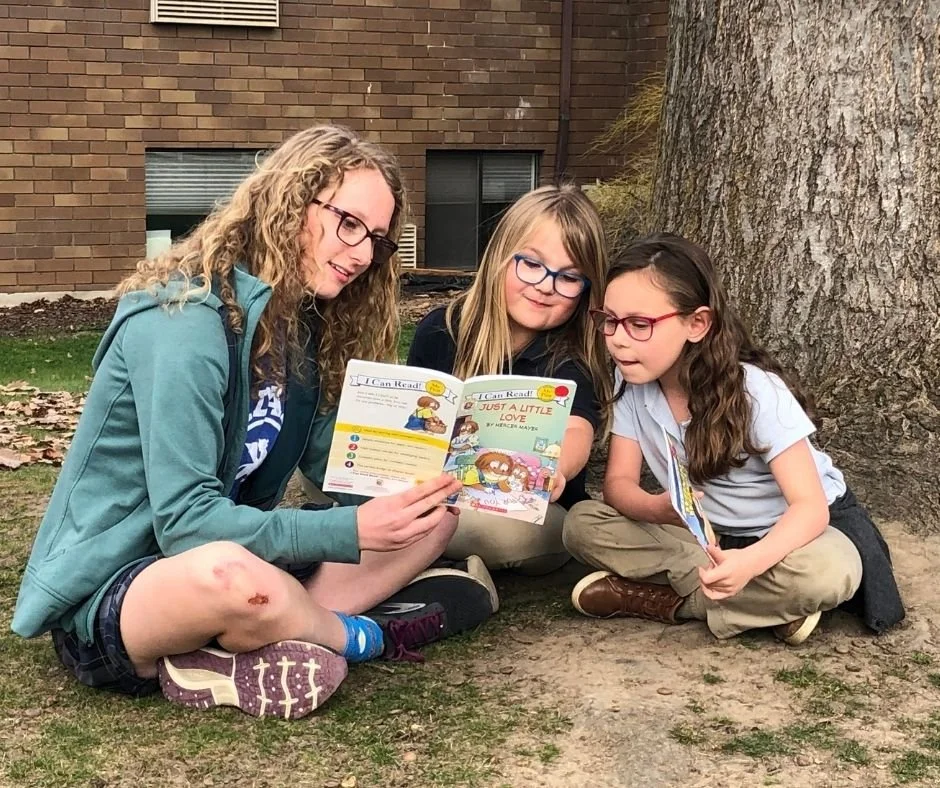
Reading Buddies. Students regularly tell me that when they were in their early years here at TRA, they had junior and senior students as reading buddies. They remember thinking to themselves, “When I get older, I can’t wait to be just like them.” Reading buddies serve as a two-way street. On the one hand, it gives our older students the opportunity to invest in students who are younger than them. It helps them get outside of themselves and serve. This is hugely helpful and important for their development as leaders. But it is also a huge blessing to the younger students. Not only do they love the interaction, but it gives them inspiration for how they want to do likewise when they are older.
All-school activities and games. It has been delightful to reinstate after school sports this year. We really missed this during Covid, and it was delightful to see students young and old all playing Eagles Nest together. This does several things to develop leadership. First, the older students can merely play to win; they do this too, but it is not their primary focus. They all go into the games knowing that their first job is to make it enjoyable for the younger students. Leadership is ultimately about putting others’ needs above our own (at least this is Christ’s model for leadership). After school sports and activities help our older students place the good of the whole above their individual desire to win.
House System. Our house system has been a huge help in developing leadership skills in students. Because students are placed in houses with ages ranging from 7th through 12th grade, the older students naturally learn to take a leadership role in their houses. This gets accentuated when students are elected to an official house leadership position, but honestly I am often most encouraged when I see juniors and seniors leading who don’t hold official leadership positions. House has been a game changer for us here at TRA in helping develop future leaders.
In the Classroom. We are educating kids who know how to organize their thoughts, work hard and develop grit, debate persuasively, and convey their convictions and beliefs winsomely. This begins in elementary with students presenting to their classmates through show & tell, oral book reports, spelling bee, and speech meet. These skills are polished in secondary classes such as logic, rhetoric, senior thesis, and apologetics.
I can’t imagine a greater calling right now than investing in the next generation of Christian leaders. Thank you for entrusting your children to us to help partner with you in this endeavor.
We love working with your children and partnering with you in this all-important mission.
Have a great week!
Eric

Managing Growth While Maintaining Academic Rigor & School Culture
Dear TRA Families,
You may have noticed that we are growing. I know, I know, the parking lot (better known as 2:45 traffic jam) sort of gives it away. But our bulging class sizes—with many of them filling to maximum capacity—also speaks to the growing desire in our community for the kind of education we offer here at TRA. This is an exciting time to be part of The River Academy. It is also a critical time for our school as growth presents unique challenges. We thought you might be interested to learn more about some of the ways we are both accommodating the increased demand, while simultaneously maintaining our academic and cultural standards.
When I first came to TRA back in 2004, there were 87 students. Everyone knew each other, and the 2:45 parking lot looked more like a family reunion than Seattle stop-and-go traffic.
Now we have 300 students and a number of new families interested for next year. While there is no way we can go back to the family reunion days of 2004, I do believe we can accommodate the increased demand while also maintaining and growing our academics and school culture.
Here are a few ways we are aiming to do so:
Gradually reducing our class sizes to no more than 18. We have long desired to have two sections per grade here at TRA. Gratefully, we have been able to begin this process, and as of next year, will have two kindergarten classes, two 1st grade classes, and two second grade classes for grades PK-2—all separated into two classes with no more than 18 students per class. This is a long-term strategic move that we believe will enable us to offer the awesome education here at TRA to as many students as possible, while also ensuring that every student gets the hands-on support we have been known for in our community. Our plan is to continue this progression by adding a new section every year. So the following year next year we will add 3rd grade, and then the following year 4th… you get the idea. When this process is complete, we believe it will allow us to accommodate the demand we are currently experiencing for our education, while still allowing us to keep class sizes small.
Increasing student support through hiring additional aides. As class sizes near maximum capacity, we see a much greater need to support our students and teachers by giving them additional aide support. If you are interested in being part of this growing team, please contact the office for more information.
Significantly increasing our focus on teacher training. This past year our administrative team outlined a 7 year faculty development plan which includes extensive training in classical and Christian pedagogy but also includes key TRA cultural elements we want to ensure continue long into the future.
Increasing our focus on student enculturation through chapel and Psalm sing. We are so grateful that Covid restrictions have been lifted enough to allow for all-school gatherings. We are actively working on plans to leverage these all-school gatherings to increase student instruction in culture and spiritual development.
Maximizing the usage of our current facilities and actively seeking the Lord’s direction for a long-term solution on our Miller Street property to accommodate the growing population. Adding the portables really helped with this, but we are also looking into ways we can further maximize our usage of the WVBC facilities to allow for more access. We recognize that this doesn’t fix the limited parking lot spaces, but it will at least allow for more breathing room for teachers and students next year.
I hope hearing these measures we are taking to grow—but in a healthy way—are encouraging to you. I hope you will join us in praying regularly for God to continue to bless TRA with like-minded families and also with the sweet culture we have all come to love.
Have a great week,
Eric
What is Protocol?
What are the most important skills and tools a person needs to be successful in life? … what kind of life skills do they need to “make it” in the “real world?”
Dear TRA Families,
What are the most important skills and tools a person (thinking of my children here) needs to be successful in life? I’m not so much talking about academic tools such as reading; that is a given. I am thinking more about what kind of life skills do they need to “make it” in the “real world?”
I bet you have ideas about this, but here are a few of my personal thoughts on the matter.
How to unclog a toilet, how to mow the grass, and how to manage a home budget are the first tasks that come to mind. But then my mind goes to other social skills, such as how to conduct themselves in an interview or how to have a conversation at a dinner party.
I do indeed want my kids to have practical life skills like how to unclog a toilet or mow the grass, but I am also struck by the incredible importance of skills that fall into the category of social graces; this used to be called Protocol.
I was recently talking to a local business owner who hires a lot of people right out of high school. They shared with me that they had recently realized their task as manager/owner had morphed to include training in life skills, in addition to the training previously required for job mastery. Why this shift? Why is it now the responsibility of the business owner to train the people in basic life skills such as how to be personable, how to treat a customer, or even how to show up to work on time?
I wonder if a shift toward informality as a society may be contributing to this challenge? Whatever the cause, the felt reality from those who are hiring students out of high school is that there is, on the whole, a gap in understanding around basic life skills.
And it isn’t just happening in Wenatchee. I was speaking with a friend of mine in Texas who was sharing a similar experience. When hiring young people, he knows that part of his job will be training them in basic life and social skills that 10-15 years ago would have been assumed.
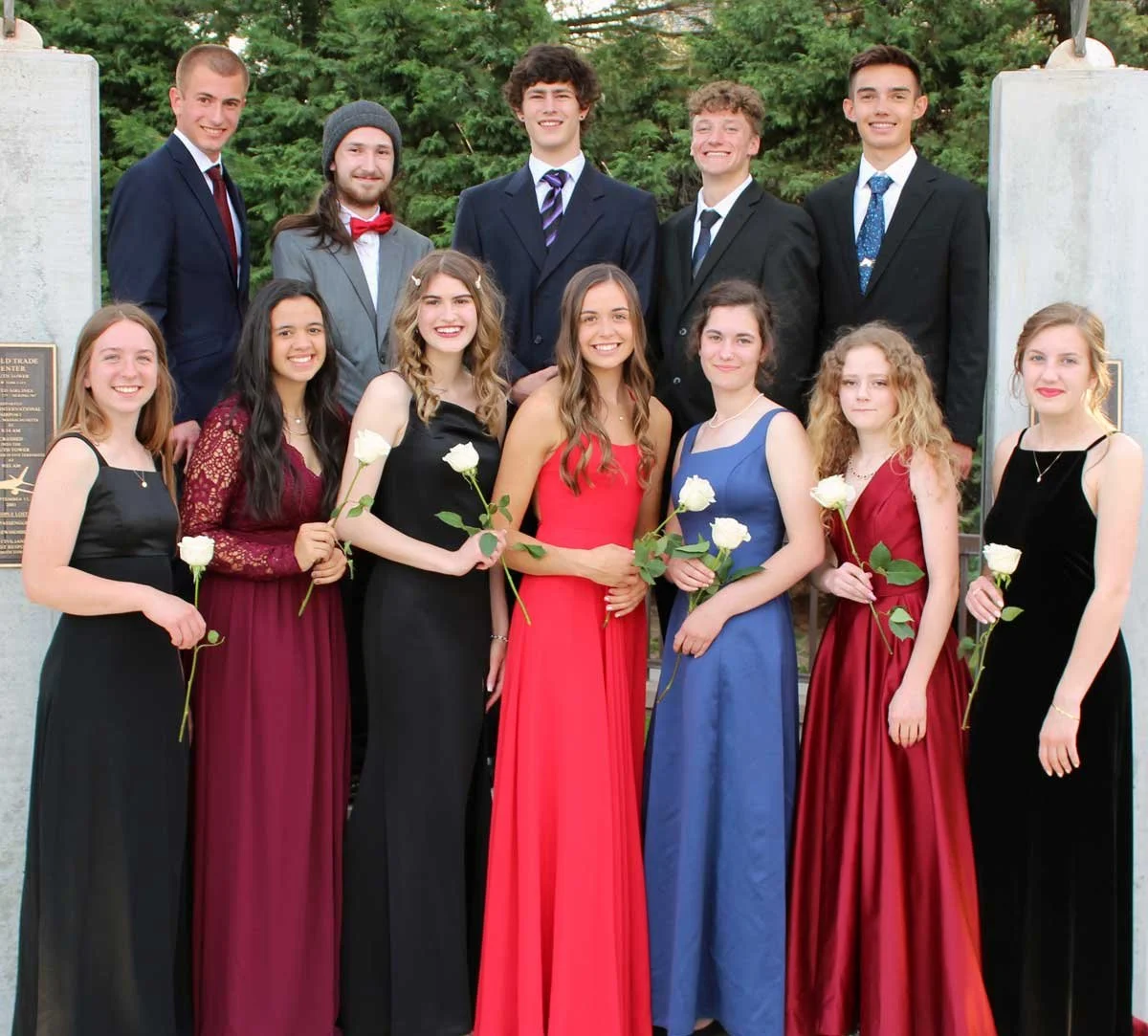
What are we doing about this at TRA? Each year we teach our high school students (9-12) a course called Protocol. What is Protocol? Protocol is “correct or conventional procedures to be followed when doing something so that it will be done consistently and with ease of cooperation.” My layman's definition would be simplified to “acting and dressing in a way that is appropriate for the occasion.”
In other words, it is me NOT showing up to a formal dinner party in sweats, nor me talking loudly during an intimate ballet performance.
How does TRA teach students some of these basic protocols?
Here is a shortlist of topics we include in the course:
How to make conversation in large social gatherings
How to escort or be escorted to a formal event
How to dress appropriately for a given situation - whether formal or informal
How to handle yourself in an interview
How to know which fork to pick when dining at a fancy restaurant
How to write a thank-you note
Several other fun and useful topics
As you can see, we don’t—and can’t—cover all social graces to equip our students for all situations. But I do hope that our small effort in teaching them protocol helps. The local business owner mentioned earlier did say that there is a marked difference they have noticed when hiring TRA students. I can’t help but wonder if we are making a dent.
And, we have a lot of fun while doing it. All of our protocol training culminates in a fun event. This year our juniors and seniors will travel to Spokane to have a formal dinner where they get to dress in formal attire and dine at a nice restaurant. Then they will have the opportunity to see the musical Hamilton live. If you are not a musical fan, that may not mean much to you, but for those who know musicals, you will know what a HUGE gift and blessing this will be for our students.
I am grateful my own children are receiving this protocol training. I see the difference it has made for our graduates and know my own children will benefit accordingly. To God be the glory in all we do at TRA to help shape and educate the next generation of Christian leaders!
Have a great week,
Eric

Mount Thesis
Dear TRA Families,
Looming at the end of The River Academy education, fearfully whispered about in the halls with solemn voices, is the Senior Thesis Project. For more than half the school, the Thesis Project is far in the distance, nothing more than the clouded peak of a high, lonely mountain, far in the distance. They might think, “That’s something we don’t need to deal with yet, for it’s five, ten, or even twelve years away. That’s for our future selves to worry about. Out of sight, out of mind.”
Not exactly.
While to an extent this is true, and even though the process actually gets underway in the High School, it’s also something for which our teachers at TRA begin training in the youthful, vibrant minds of our students, from an early age. The Thesis Project is, ultimately, the culmination of our students’ years at The River Academy, bringing together everything that they have worked so hard to learn, to understand, to achieve. It represents a synthesis of worldview through all years and all subjects–and we prepare our students for it from the time they first begin constructing written sentences.
Yet, there is a fear of that project. That fear comes from the unknown. Many people, longtime school families, do not understand what the Thesis Project is. We have only “fear itself” to fear, however. Let me attempt to clarify this fearful unknown.
The Senior Thesis Project is a 20-25-page thesis-driven (meaning, argument-driven), research-supported essay. In the last week of the Junior year, students will begin to think about a historical, social, governmental, economic, scientifical, biblical, rhetorical, or literary topic to research and find an argument for. This will cover the modern era and must be relevant to the current day: any topic that they have the desire and interest to explore further and argue more in-depth. This must be a topic about which they could argue from a biblical worldview. That means it cannot contain a report of research alone. Our seniors must use that research to argue a point–their topics must inherently contain a debate. They must apply a biblical worldview, taking it further than simply agreeing or disagreeing with a subject. As with any thesis-driven essay, they must point toward something significant.

While all this sounds daunting, the process of this thesis makes it utterly accomplishable. While this project is certainly a mountain for our seniors to climb, they do not make the ascent alone, nor do they attempt the climb in one go. By the start of this project, they’ll have written already three theses (Freshman, Sophomore, and Junior), so the process is wholly doable because they’ve done it already. Moreover, we pair them with a faculty advisor and each aspect of the Thesis Process is broken down into its parts (note-taking, outlining, bibliography, drafting, revising) over a nearly year-long period. Following the final, perfected revision, these seniors on the verge of graduation will stand before a panel of their teachers and an audience of their peers to deliver a 20-25-minute speech from memory based upon their papers. At this point, our seniors will have accomplished something truly remarkable, something that few young men and women in their position have–or can–accomplish. They have summited Mount Thesis and can see the lush valley of the Graduate just beyond.
If our goal at The River Academy is to train the next generation of Christian leaders, this is one of the means by which we hope to assess this. Can they think well? Can they argue well? Can they empathize well? Can they communicate effectively? By the end of their years at The River Academy, they can, by the grace of God and their own hard work.
Here are a few Senior Thesis topics we have had over the last few years:
The Worldview of Role-Playing Games
A Critique of Modern Christian Art
Having A Growth Mindset
Should Christians Watch Horror Movies
Should Classical Christian Schools Teach Graphic Novels
There are Men in Movements Yet None in Mobs
True Leaders Must Be Held Accountable
Why Young Men Should Play Team-Based Contact Sports
Tackling the Body-Image Pandemic
Why Christians Shouldn’t be Paralyzed by Fear
The Father-Image Problem in Sitcoms
A Christian Approach to CRT
Have a great week!
Tyler Howat
Dean of Academics
Definitions Matter
Dear TRA Families:
Definitions matter. For example, here are two very different definitions of the same word:
Justice: “Just treatment of all members of society with regard to a specified public issue, including equitable distribution of resources and participation in decision-making; usually used in combination,” (Dictionary.com).
Justice: “The virtue which consists in giving to everyone what is his due; practical conformity to the laws and to principles of rectitude in the dealings of men with each other; honesty; integrity in commerce or mutual intercourse,” (Original Webster's 1828 Dictionary).
Which one is correct?
Historically and biblically, justice meant to give each person what they deserve based on their actions. When thinking about this spiritually, we run into problems because none of us have done perfectly right, which means we justly deserve punishment. Paul's argument in Romans is precisely this, “All have sinned and fallen short of the glory of God, AND [emphasis mine] all are justified freely by his grace through the redemption that came by Christ Jesus,” (Romans 3:23-34). Praise God for this good news.
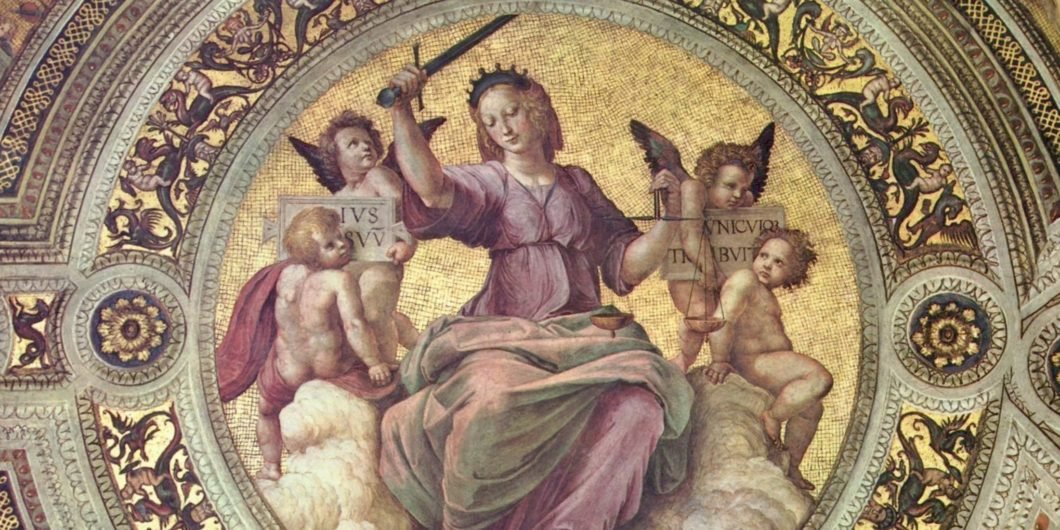
Historically, when it comes to societal justice, we see a similar notion. Take a look at this 15th century painting depicting justice:

Cardinal Virtue: Justice
What do you notice about the items “Lady Justice” is holding in her hands? In one hand is a scale, which we can interpret as a fair and balanced assessment of what a person is rightly due given their actions. In the other hand is a sword, which is there to dole out a proper punishment given a person's actions.
Isn’t this interesting given the more modern definition I quoted above from Dictionary.com? Rather than giving each person what they deserve or what is their due, instead, the definition has to do with equality—specifically an “equitable distribution of resources and participation in decision making.”
How does this differ from historic and biblical justice? First, the modern definition ties justice to a public issue. This is where we get phrases such as social justice, economic justice, or environmental justice. Justice is now tied to issues rather than an individual's right or wrong actions.
Second, it removes the scales of balance and right judgment from the equation and replaces it with the word equitable, which means equal or the same. No need for discernment here; we all get exactly the same regardless of merit or effort. Third, it requires equal participation in decision making. “Do not be deceived, God cannot be mocked: A man reaps what he sows,” (Galatians 6:7). Biblically, we see a clear connection between actions and results, between what we do and what we will experience as a result of those actions.
When personal responsibility is removed from the equation, I can’t help but wonder if we are no longer talking about justice—certainly not biblical or historical justice. In this case, I believe we should instead use a different word to describe what we are after. In other words, when phrases like “social justice” are used, are we really talking about justice in its truest sense, or are we talking about fairness or equality? If so, we should use the word best suited to our intent and purpose.
Finally, what if everyone had equal say in their own just punishment? How would that go as a society?
We live in a challenging time and one in which our children will need to be very discerning about these types of issues. This is why we are actively talking with our students about things like justice vs. equality and why the definitions matter.
Thanks for partnering with us here at TRA to raise the next generation of Christian leaders.
Have a great week!
Eric
Gaining Courage and Self-Control
Dear TRA Families,
I was on a field trip with seventh grade students before Winter Break. On the car ride up to Leavenworth, several students were playing with their cell phones and making music with the Garage Band app. I was struck by the fact that they were able to “play” songs on the guitar virtually via a cell phone regardless of whether they could actually play the guitar in real life. In other words, they could do things virtually that were completely divorced from reality.
Wow, I thought to myself - this is quite a temptation for these young souls. After all, virtual life is much easier than real life. I could learn to play a quick riff on Garage Band in a day. That would likely take me months to learn in real life.
Likewise, I can have virtual friendships with a click of a button, when in reality, it takes courage to go up to a new person and initiate conversation.
So how do we equip our students to live with these temptations that many of us never faced as teens?
No one disputes education's power to form young souls. Beginning with Plato back in the 4th century B.C. and has continued to this day. Education is a powerful tool to form the attitudes and affections of the youth. For this reason, education has become such a battlefield today; it literally holds the future in its balance.
How do you want your child's soul formed?
My running assumption is that one of the main reasons you want your child educated at The River Academy is because you see the power education has to shape the souls of your children. With this in mind, we have to think a lot about what we aim to instill in these young, impressionable minds.
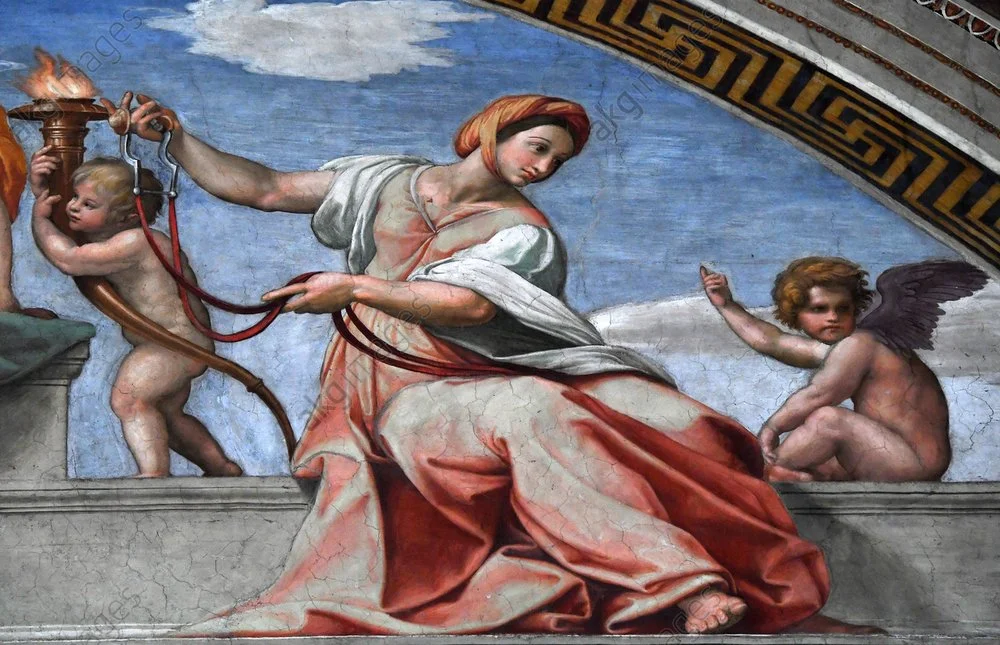
This is why we have aligned ourselves with the inculcation of virtue here at TRA. Virtue has long been viewed as one of the primary goals of education. And history has proven out those virtues which are most important to instill in these young minds. Specifically, we are aiming to help our students grow in love and appreciation for the Cardinal Virtues (prudence, justice, fortitude, and temperance) and the Spiritual Virtues of faith, hope, and love.

I’ve grouped fortitude (courage) and temperance (self-control) because they go hand in hand. This is my definition of each:
Fortitude - the ability to confront and not back down in doing good.
Temperance - moderating our dispositions to avoid excess or deprivation.
Why do our young men and women need these virtues today? I bet you can fill in your own reasoning, but here are my quick thoughts on each:
Fortitude:
It has been said that we are living in a “post-Christian world.” I don’t think we need to look too far to see signs of this everywhere. For example, here in Washington State, the recently adopted “Comprehensive Sex Education” curriculum is a telltale sign that our society no longer values traditional Christian values. In my estimation, this means that your children will need to stand up for the truth of the Gospel in ways many of us as adults have never been forced to do. This will require great courage. But I also think choosing to live life in person and face to face will increasingly require great courage. Social media friendships are easy (most of the time) and allow us to engage in friendships from the comfort of our beds. Going out, leaving the comfort of our safe spaces at home and risking a conversation with a friend in person will become increasingly an act of courage for our children. But their survival as humans depends on it.
I pray our young men and women here at TRA are gaining in courage in preparation for challenges they will likely face in their future.
Temperance:
As Solomon pointed out in Ecclesiastes, “there is nothing new under the sun” (Ecclesiastes 1:9). While I believe this applies to all areas of temptation, I also recognize that our children have to navigate areas that we never did as children. Take my earlier example of the cell phone. While I think it is awesome that my daughter can text me when she is on her way home, I am also keenly aware of the inherent temptations associated with having a pocket computer that you take with you wherever you go. Whether it is the temptation to get sucked into social media feeds endlessly or even the temptation to relate with your peers via a phone rather than face to face, these are things I never had to learn to manage as a young adult. Yet students have to learn self-control in these areas at a much earlier age than I ever did. Maybe you can relate.
How do we help our children grow in temperance and fortitude? It’s a daily battle for sure, but here at TRA, we are working to regularly help our students navigate these real life issues. Whether through the regular in-class discussions which challenge students to participate and gain a strong voice for themselves or through the books we read which help them discern truth from lies, we are on your team in helping your children gain courage and self-control. We love that we can partner with you in these areas.
May God grant all of us wisdom to navigate these tough challenges.
Have a great week!
Eric
Self-Sacrificial Love
Dear TRA Families,
I’m not a charismatic person and I can’t say I have ever had a word from the Lord. But I did have an epiphany recently, and the more I have ruminated on it, the more I think is an interesting theory. It has to do with our current world and all the craziness that is modern day. I wonder if you will agree with me. But before I give you my theory - let me ask you a question:
What do you believe is the single biggest problem in America today?
I believe the single biggest problem in America today is that we have adopted a wrong view of love (I know, appropriately themed on Valentines day, right?), and I think I know how we got here.
In his book The Abolition of Man, C.S. Lewis criticizes a trend he sees in the textbooks of his day. What he observes is that textbook authors (likely unknowingly) had begun to replace objective language with language that instead appealed to subjective feelings and emotions. Lewis argues that this subtle change will result in the “Abolition of Man.” And while Lewis’ argument applies to more than just the notion of love, I believe his observations of the trend in his day are a definite cause of trends in our current day—especially around the concept of love.

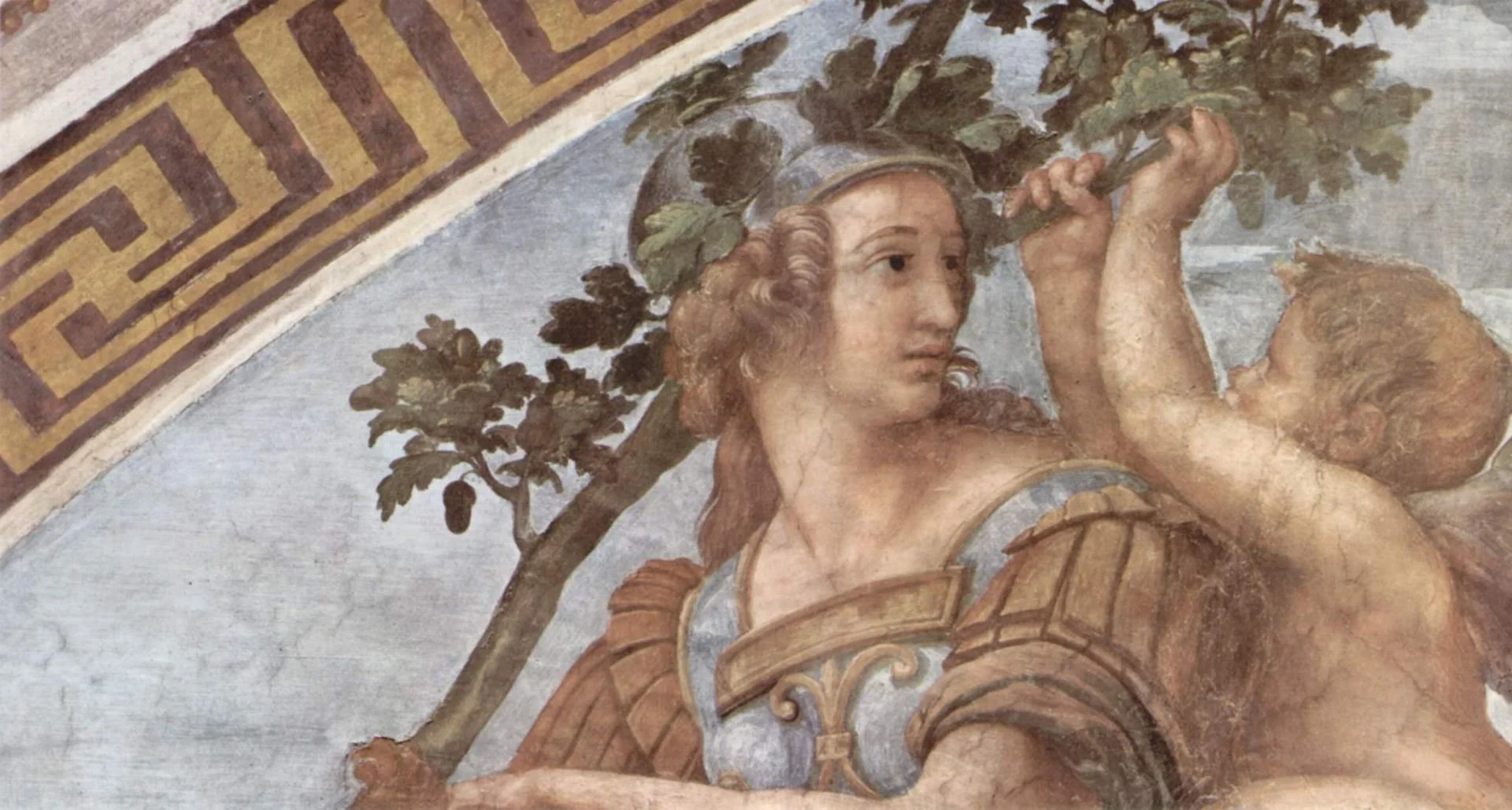
In this image by Raphael which we have looked at the past few weeks, I find the depiction of charity (love) very interesting. Charity is depicted by the little Putti (much like a cherub, but without wings) which is gathering fruit from the tree in order to give it to Fortitude (who is likely preparing for a battle).
According to Raphael, love (charity) is doing something on behalf of the other and not the self. In other words, love traditionally—and I would argue biblically—is fundamentally self sacrificial. The Apostle Paul would agree when he says, “Love is patient, love is kind. It does not envy or boast; it is not arrogant or rude. It does not insist on its own way; it is not irritable or resentful; it does not rejoice at wrongdoing, but rejoices with the truth. Love bears all things, believes all things, hopes all things, endures all things. Love never ends.” (I Corinthians 13:4-8)
Notice how all the language is oriented toward others and not the self.
If our modern understanding of love was that it was fundamentally self-sacrificing, would some of the trends we are seeing in our modern day be different? C.S. Lewis believed that a move away from objective to subjective language, feelings-based language in education would lead to a number of negative consequences, which would ultimately result in the downfall of society.
I can’t help but wonder if our modern sense of love as a feeling more than an act which sacrifices oneself is a byproduct of this trend which started almost a century ago.
I am grateful we are seeking to reclaim a biblical view of love here at The River Academy.
Have a great week!
Eric
The Most Important Cardinal Virtue
Dear TRA Families,
Last week I began a series on virtue and the critical role it played in education throughout history.
Today I am going to talk about the Cardinal Virtue that has been considered the most important out of the list of four (prudence, justice, temperance, and fortitude). But before I give you the answer, which of these would you rank as most important?
St. Thomas Aquinas believed that of the four Cardinal or Principled Virtues, prudence was most important. I think a case could be made for justice as well, which is why in last week's Fresco by Raphael, he DID NOT include justice in his depiction of the virtues and instead painted it on the ceiling overlooking all the other three. In either case, they are all important, but for the sake of landing somewhere, I will discuss prudence as it pertains to an education here at TRA.
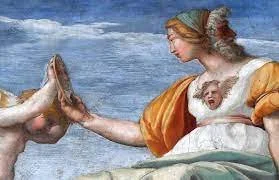
Let’s first revisit Raphael’s depiction of prudence in the painting I showed you last week:

Raphael’s depiction of prudence
Notice that the front-facing woman is looking into a mirror upheld by a cherub. This is to show both a forward-facing posture, but also one that is self-reflective. But then notice the back of the woman's head; it is the face of an old man. This is believed to reflect the need to also look back on the past with wisdom so as to learn from what has gone before in order to make prudent decisions going forward.
Aristotle says that Prudence is recta ratio agibilium. This is Latin for “right reason applied to practice.”
Here at TRA, we aim to educate students who can become the next generation of Christian leaders, equipped to shape culture through faithful, wise, and joyful Christian living. Part of this educational process is helping them to learn wisdom and discernment so that they can apply “right reason to practice.” How do we do that? Just like Raphael’s painting asserts, we believe one of the best ways to gain wisdom is through knowledge of the past. For this reason, our students read a lot, and then discuss extensively.
I recently had a parent ask me why we read controversial texts like the Koran (or a number of others like the Communist Manifesto)? My answer was simple: we want our students to read from a wide variety of the texts that have shaped human history, but do so in an environment where they can apply the scriptures to what they read, and then discuss it in relationship with peers and teachers who love God. In this way, we believe our students will be able to gain wisdom and prudence so that they can apply “right reason to practice.”
To God be the glory!
Have a great week,
Eric

Chief Aim of Education
Dear TRA Families,
For centuries, the purpose of education was NOT to prepare children for a fruitful life of work. In fact, from the beginning of Western civilization, the thought leaders in education—people like Plato and Aristotle—didn’t really think education needed to equip children for a specific job at all.
But if it wasn’t future job preparation, what was it? And what does this mean for a TRA education?
For Plato, the end goal of education was actually character-oriented in nature. “There is one element you could isolate in any account you give, and this is the correct formation of our feelings of pleasure and pain, which makes us hate what we ought to hate from first to last and love what we ought to love. Call this education.” (Plato, Laws 653b1-c4). In other words, Plato believed the purpose of education was to cultivate the loves or the affections of the student so that they “love what they ought to love.” Does this sound familiar? “Love must be sincere. Hate what is evil; cling to what is good.” (Romans 12:9)
Rightly ordered affections and appetites are what Plato elsewhere calls virtue. What is interesting to me is that while Plato’s motivation may be different than ours as Christians, his chief aim of education is actually the same. Plato wanted virtuous citizens because he believed it would result in a more virtuous society. For us, we want our children to be virtuous so that they might live a life that glorifies their Heavenly Father, and will also lead to a more virtuous society as a byproduct. Yet the value placed upon virtue as an end goal for education is the same.
Plato’s articulation of the main purpose of education being the cultivation of virtue became the dominant theme in the history and philosophy of education up until the 20th century. This view was first held by pagan philosophers, but was eventually picked up by prominent Christian thinkers such as Augustine, Basil, and Aquinas. Over time, those virtues that Plato articulated in basic form became codified in what we now understand to be the Cardinal Virtues of prudence, justice, fortitude (courage), and temperance. In the Sixth Century A.D., when Gregory the Great codified the list of Seven Deadly Sins, the church took the Four Cardinal Virtues and juxtaposed them to the Seven Deadly Sins but added Three Spiritual Virtues to make both lists of seven. The Three Spiritual Virtues are faith, hope, and love.
Over the next few weeks, we are going to discuss the ways in which we at TRA are hoping to help our students grow in love and appreciation for these virtues in a way that they begin to “love what they ought to love and hate what they ought to hate.”
Have a great week!
Eric

Extra Credit: See if you can figure out which of the Four Cardinal Virtues is missing in Raphael’s painting in the Vatican entitled “Cardinal Virtues.”
Check your answer: en.wikipedia.org/wiki/Cardinal_and_Theological_Virtues_(Raphael)
The Art of Gracefully Adjusting
Dear TRA Families,
Phew! What a crazy start to the new year we have had. First, it was the snowpocalypse, then a burst water main (which was seven feet under one of the portables, by the way). Praise God those two are behind us now and the plumbers were able to dig the entire hole by hand. What a crazy deal.
With these interruptions to our normal schedule, plus the lost week of school we had in October due to Covid, some parents have asked if we will plan to extend the school year into the summer.
The short answer is no. We do not have any plans to extend the school year beyond the current end date of June 10th at this time. If there is one thing I can say we have learned as a result of COVID, it is the art of gracefully adjusting. Last year, we essentially had ⅔ of the number of in-person instruction days that we normally have in a school year, and we managed to finish most of our curriculum. The two disruptions we have had so far this year are nothing compared to what we faced last year (I almost want to say knock on wood, but I’m not superstitious).
With this said, we are making adjustments. For example, we have made the decision to not hold a spelling bee or speech meet for our elementary students this year. This was primarily decided as a way of giving teachers back the time they would have spent preparing for those events, enabling them to focus on their primary subjects. Likewise, we are pursuing fewer field trips this year as a way of giving back some teaching days. We are still trying to provide some fun experiences for students, but just less than we normally would.
I am confident your students will still receive a rigorous, high-quality TRA education this year despite the interruptions. Yes, we have had to adjust and cut out some things we love about our school, but on the whole, we are right where we need to be.
Please feel free to reach out with further questions.
Have a great week!
Eric
Generous Community
Dear TRA Families,
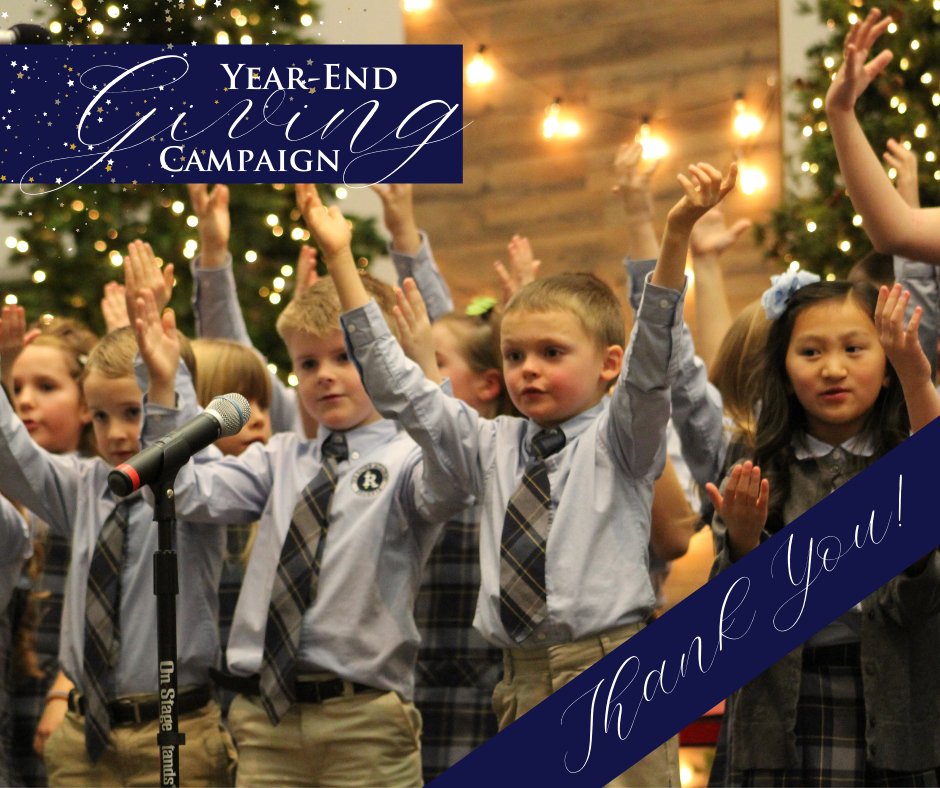
We have officially wrapped up our Year-End Giving campaign and I want to take this time to say THANK YOU! We are once again blown away by your generosity. And so you can share in our encouragement, I thought I would give you some basic numbers with regard to the Year-End Giving campaign, and also 2021 in general.
Here is a recap of the Year-End Giving campaign:
Total Raised: $62,351
Number of Donors: 69
Average Gift: $903
Gifts ranged from $15 to $10,000
To sum up Total Giving in 2021:
Total Giving: $97,850
Number of Donors: 92
Who are these folks? 70% of our donors are our families (primarily current families and grandparents, but also former families).
Isn’t that encouraging? TRA has always been such a generous community, and this past year was no exception. I think what is most encouraging to me is that all of this was done without any specific fundraising event. What a blessing to our school. Through the generosity of all of you, we were able to provide financial aid support to 57 different students at TRA. Way to go TRA community!
Thank you again for your generosity! May God richly bless you in the new year!
Eric

Raising Children in the Lord
Dear TRA Parents,
“These commandments that I give you today are to be on your hearts. Impress them on your children. Talk about them when you sit at home and when you walk along the road, when you lie down and when you get up. Tie them as symbols on your hands and bind them on your foreheads. Write them on the doorframes of your houses and on your gates.” (Deuteronomy 6:6-9)

Well, if that isn’t a high bar for parents, I don’t know what is! Do you ever feel overwhelmed by the task of parenting—and more specifically—raising your children in the Lord?
If so, you’re not alone.
Deuteronomy literally means “repeated law” or “repetition of the law.” This was Moses’ final words to Israel: the flock he shepherded over a long and hard journey. I think it is helpful to view this book as his last words of wisdom or his parting advice.
When viewed in this context, his words to parents (quoted above) are both inspiring and overwhelming. In essence, Moses tells parents that their primary duty with regard to their children is to impress God’s law on their hearts. And to do this, we must talk about his law continually and in every circumstance.
I don’t know about you, but I would currently give myself an F in my faithfulness to this command. This tall order regularly brings me to my knees.
Yet it also causes me to regularly cry out in thankfulness that I am not doing it alone. The River Academy’s mission is to partner with parents in educating their children to become the next generation of Christian leaders. When we use the word partnership, we mean it. We truly see ourselves as your partners. It’s what gets all of us out of bed each morning - the desire to be good partners with all of you as you are going about the all important task of raising your children in the Lord. Yet it also causes me to regularly cry out in thankfulness that I am not doing it alone.
How do we do that on our end?
First: With lots of prayer.
Next: By living out our faith hour by hour in front of your children.
Third: By using every opportunity we can to remind them of their (and our) need for a savior.
Fourth: By immersing them in God’s word.
And finally: With lots of prayer (yes my repetition here was intentional).
What does that look like on your end?
We are so grateful you have chosen to partner with us. We know this partnership on your end takes work. Whether helping your children with their math homework, regularly checking in on Canvas to keep your middle school student organized, quizzing them on Latin or phonograms, keeping a joy-filled and positive attitude when your child is struggling with an assignment, or simply just being actively engaged with their education; it takes work. Sometimes lots of work. And all of this is on top of the already challenging task of loving and leading well in your home. Well done! Please know we are praying with you. Raising children is something all of us can only do with God’s grace!
Thank you for encouraging and faithfully guiding your children through their academics as well as their walk with the Lord, and by doing so, partnering with us. We love your kids and love the opportunity and privilege we have to partner with you in raising them to be critical thinkers who are solidly grounded in God’s word.
God Bless,
Eric

“O Come, thou Dayspring, come and cheer...”
Dear TRA Families,
“O Come, thou Dayspring, come and cheer...”
I wonder if any of you feel as though you’d enjoy some Christmas cheer this Advent season?
When you think of Advent, what do you think about? I was recently in one of the elementary classes here at TRA, and one of the students shared in the form of a prayer request that we needed to pray for his dog because it discovered his Advent calendar and ate all the chocolate out of it.

Admittedly, this is what comes to mind when I think of Advent. I remember the cardboard calendars with openable windows filled with chocolate goodness. I remember the anticipation I felt each evening, knowing I could open up that window and get my tasty treat. There is something of deeper meaning and importance to this anticipation; the intent of Advent is to build anticipation for the coming of the “Dayspring, the Key of David, Emmanuel.”
I am intrigued when I peruse the hymnals and thumb to the Advent section. What I find on the pages of those traditional Advent hymns is not nearly as cheery as the type of anticipation akin to chocolate after dinner. Chocolate is indeed good, but the lyrics of those hymns are more in line with the most famous of our Advent hymns, “O Come O Come Emmanuel.”
For example:
O come… and ransom captive Israel
O come… and free [us] thine own from Satan’s tyranny
O come… and disperse the gloomy clouds of night… and deaths dark shadows put to flight
Not exactly cheery… or is it?
The song ends with the familiar phrase repeated through all seven verses:
“Rejoice! Rejoice! Emmanuel shall come to thee, oh Israel.”
I wonder if any of you have felt the “gloomy clouds of night” over the last 18 months? I wonder if any of you have felt captive; to fear, uncertainty, anger, to the news, to anything else? I can answer yes, yes, and yes to each of these.
This brings me to my point today. I keep asking myself, “How do I move past this?” How do I NOT feel captive? How do I NOT feel the gloomy clouds of night? Our world has been turned upside down since March of 2020. And while all of us wish this overturning would end soon, it doesn’t “show signs of stopping” (to quote a much less spiritual Christmas song). But perhaps that is the point. Perhaps the answer is right under my nose, in my all time favorite Advent hymn.
The reality is that life is and has always been filled with challenge, adversity, gloominess, and darkness. Why? Well, sadly because we as humans inhabit it and we don’t always—no thank you to Adam and Eve—do what is best for ourselves or others.
But there is good news in the midst of the dark. Rejoice! Rejoice! Emmanuel shall come to thee.
And this promise isn’t past tense. It is present tense. This is the point. Since Adam and Eve ate of the fruit, the world has been plunged into chaos, disorder, darkness, and gloom. The good news we celebrate at Christmas isn’t the eradication of these hard things. It is the gift of being changed, transformed, and renewed through Christ and the work of the Spirit, in the midst of this troublesome place.
I promised you cheer. Emmanuel: God IS with you (and me)! And the miracle is that His invitation to be at peace in the midst of chaos is here for all of us who belong to Him. Sadly—I must confess—I haven’t always availed myself of these promises over the last 18 months. Sometimes I’ve rejoiced in the presence of my Savior and sometimes I’ve been held captive by fear or anger. Maybe you can relate? But today I rejoice that God is with me. I rejoice that He is with my children! I rejoice that he is with you. I rejoice that He is with our school.
This is the Good News, and it is indeed bright and cheery!
Wishing you God’s Peace this Christmas!
Eric

Classical Art Studio
“I loooooove ART!” is whispered, grunted, and squealed daily in TRA’s Art Studio Room. We believe this happens because creating art is us utilizing our God-given creativity. We believe everyone can draw—and draw well.
TRA’s Art Studio curriculum is unique in three distinct ways:
As image-bearers, we believe everyone is capable of creating beautiful works
We use Atelier Methods (classical drawing methods) to develop the skills of art
Art history compliments what students study in each grade level
First, we believe everyone can produce beautiful works of art:
Have you ever heard someone say (or maybe you have even thought), “Well, I’m not an artist and I can’t draw?!” At TRA, we disagree! Drawing and painting well is a by-product of skill. Skill can be learned over time and with proper scaffolding. Progress can be seen weekly and yearly as students repeat skills, such as those used in drawing.
We study truth, beauty, and goodness through exploration of skill, intelligence, knowledge and craftsmanship. This tag line hangs large on the Art Studio wall (Art & the Bible, Schaeffer)(‘Art for God’s Sake, Ryken).
Those who have older students will notice similar assignments done at each grade level and how each grade takes it a bit further. Scaffolding assignments through the year and over multiple years breeds confidence through familiarity. Knowledge is gained over time and with exposure to a variety of media, methods, and techniques. Intelligent decisions are made and include a lot of lovely errors along the way. Put all this together in application and attention to detail and process, and we develop good craftsmen.
Our study and search for truth, beauty, and goodness is our gift from God. Through this pursuit, we endeavor to create wholeheartedly in the sight of God.
Second, we use classical methods for teaching art to train our students well:
‘Ateliers’ are workshops where students work with a master artist. Ateliers have been around since the Middle Ages and were popular in the 19th century. In fact, our revered artists such as Michelangelo, DiVinci, David, and Picasso all studied in Ateliers. These small schools lessened after the World Wars; universities acquired them and these art schools became something other than places to study how to draw well.
However, Ateliers are regaining popularity. The Atelier methods center around drawing well and drawing truth. Sight-size methods are used, requiring precise measuring. The artist learns to see—to really see—the relationship between lines and shapes. Here at TRA we have been practicing measuring skills from the first grade on up.
TRA’s Classical Art Curriculum easily and intentionally aligns with the Grammar, Dialectic and Rhetoric stages. Our Elementary/Grammar students study the basic Elements of Art (line, shape, forms, space, texture, and color). This fall, all of our students have worked with line in different capacities, and recently we’ve been making shapes into form. Older students will move to integrating the principles of design (balance, emphasis, movement, pattern, repetition, proportion, rhythm, variety and unity).

7th, 8th, and 9th grade’s Dialectic stage is perfect for learning one point and two point perspective. These students are interested and excellent at learning mechanical drawing skills that will serve them well into their future. In ninth grade, our students return to Atelier methods, and our tenth graders will study using the textbook “Beginning Atelier” (Aristides). These are the foundation years preparing them for their master copies; in line with a traditional Atelier, our 11th graders pursue a drawing after a master work and 12th graders will complete a master painting copy (imatado).
See the image of the foot and know that it took this student twelve hours using only a mechanical pencil (and a desire to search for truth).
Lastly, our students learn Art History as it integrates with their time period of historical study:
TRA’s history timeline is strategically in perfect alignment with what we’re studying in art history for each year’s respective period. For example, our first grade is completing a clay pinch pot after studying the clayware of the Hopi Natives, complete with native designs. The 2nd grade class created a clay hippopotamus after the infamous Blue Hippos found in many Egyptian tombs. Our 3rd graders designed and molded Greek vases, and so on. Thankfully there are many resources that help us learn this well, such as AP Art History/Khan Academy and other reliable videos, research, and images.
In the end, we believe as we learn to create art, we develop skills which lead us towards truth, beauty and goodness. All of this leads us toward emulating our Creator. To God be the glory!
Blessings,
Cyndi Noyd
BFA Painting, UW
WA State K-12 Teaching Certificate, Art Education
National Boards 4-12 Art
MA candidate, Florence Academy of Art